
Voices
18.11.26 · Hamburg
Smag På Dig Selv at Molotow, Hamburg 2026: a Danish trio, minus one saxophone neck
// Andreea Soare & Ioana Gradinaru · 6 min read
Sometimes everything goes wrong and you have to make do with an interpretive dance. That was the night for Smag På Dig Selv at their first concert in Hamburg. Bass saxophonist Thorbjørn Øllgaard had left the neck of his saxophone in Copenhagen.
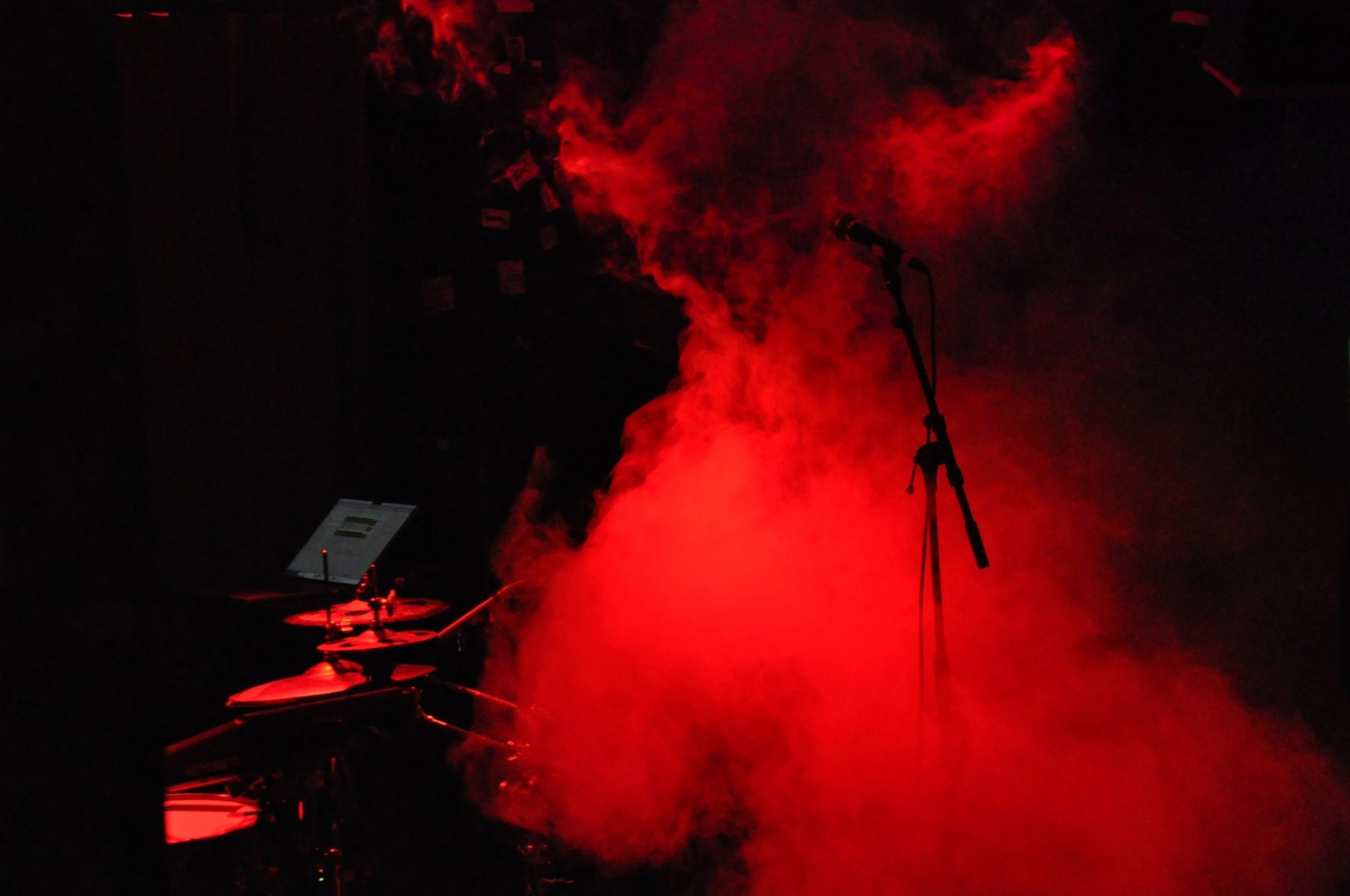
As you head down the Reeperbahn, Hamburg's famous nightlife street, you can go through two black metal doors in a back alley, down some concrete stairs, and find the Top Ten Bar at Molotow. A small room, full of occasional smoke, preparing for the Danish band to play.
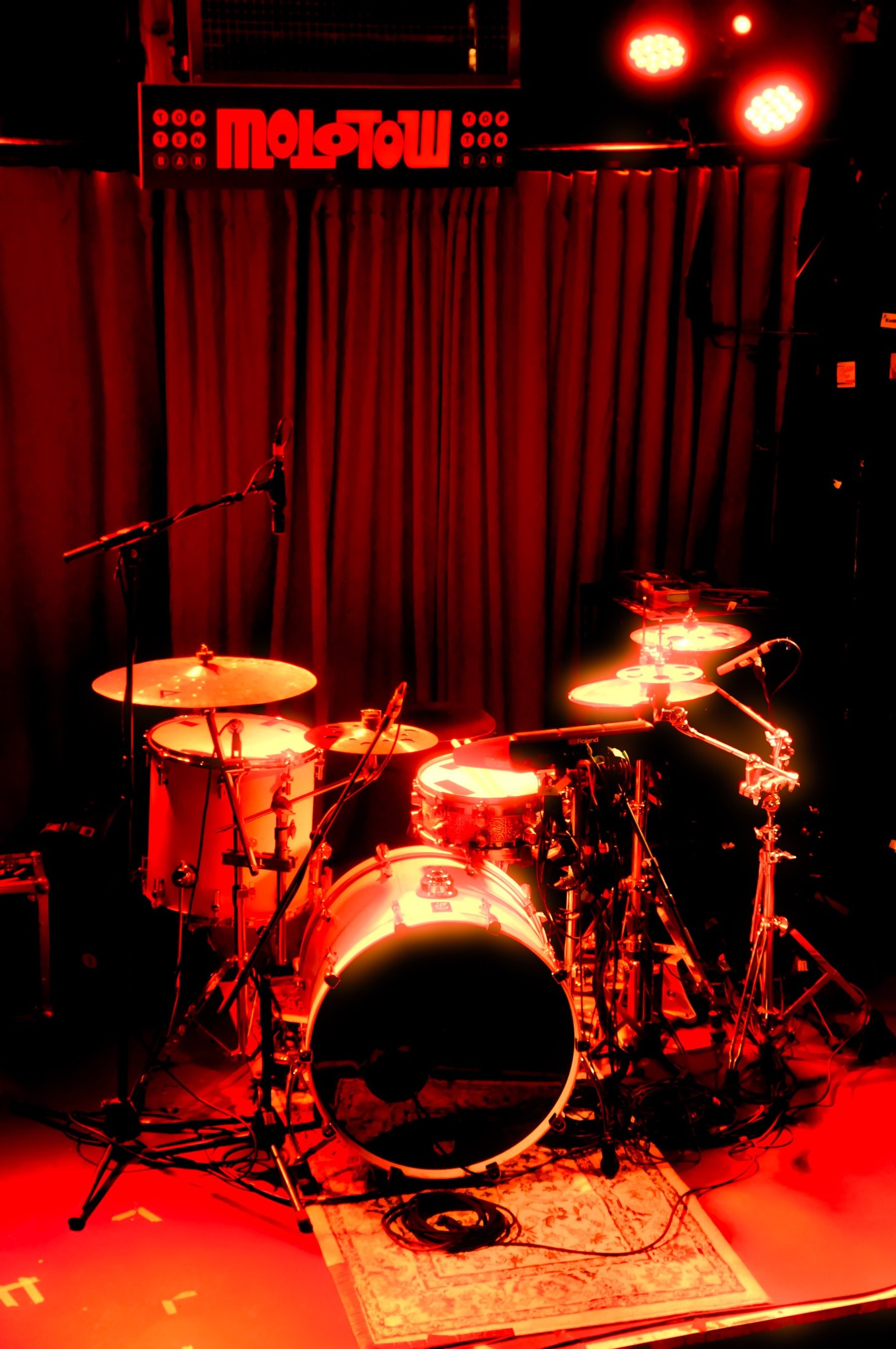
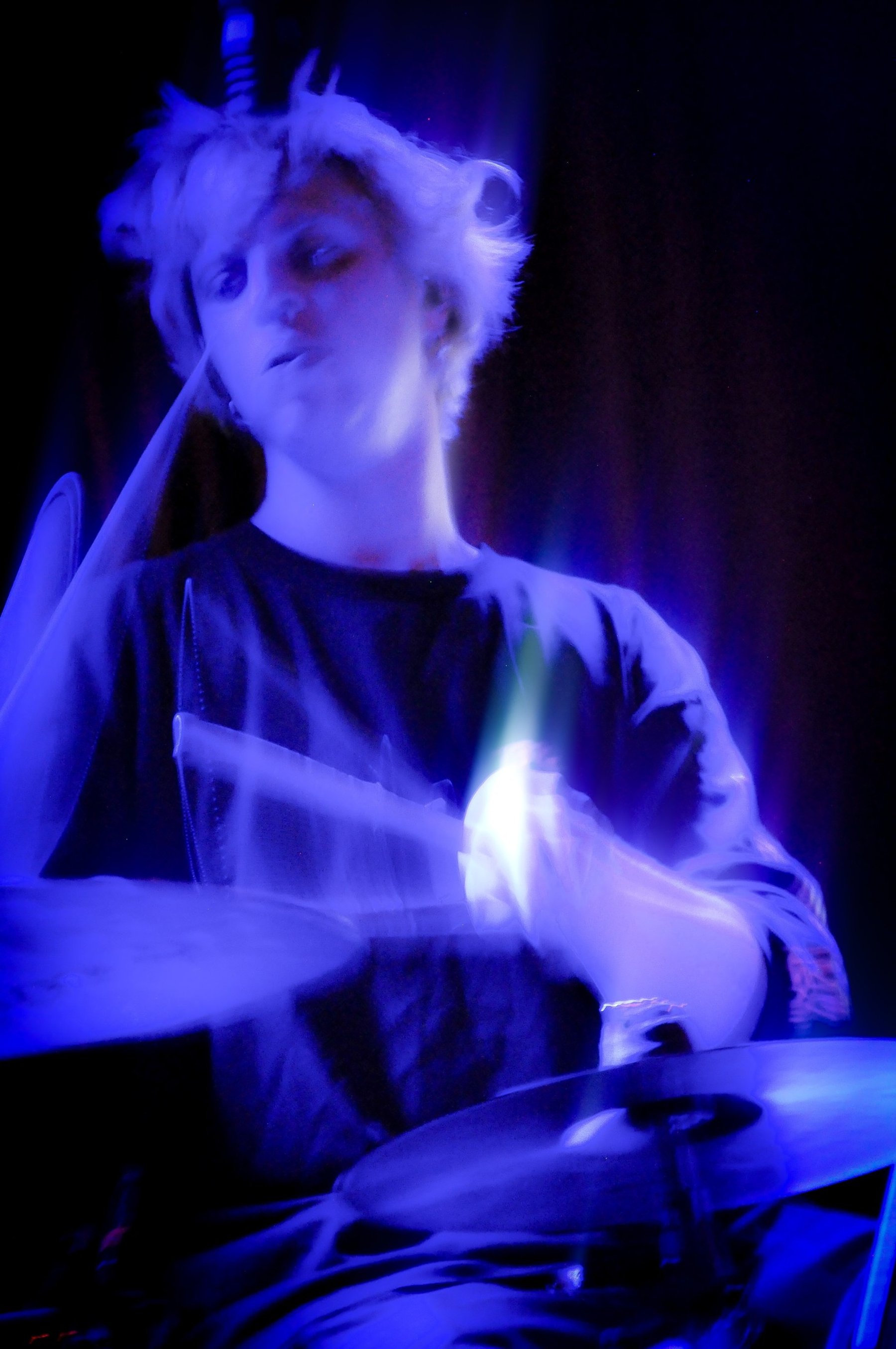
Smag På Dig Selv is a band formed in Freetown Christiania, a self-governed commune in the middle of Copenhagen. The trio is Oliver Lauridsen, Albert Holberg and Thorbjørn Øllgaard. Their genre is hard to put in a box. With two saxophones and a drum, they mix jazz, electronic music and a touch of punk. That style comes with a lot of compromise, as bass saxophonist Thorbjørn explains: ‘We come from very different musical backgrounds. Albert is metal, Oliver is jazz, and I come from electronic.’
Ten years, one long argument
We sat down with the two saxophone players near the stage they were about to play on. They told us about their history. They have known each other for ten years, but Thorbjørn and Albert go back further: both were born and grew up in Christiania.
As for the name, they do not remember. The night they came up with it, they started with another name, Thunder Bear and the Empty Bar, got really drunk and woke up as Smag På Dig Selv.
Even though they have known each other so long, finding common ground is not always easy. ‘We have nothing but arguments. There's one long argument every time we communicate,’ Oliver says. They seem to use that as part of the creative process. ‘Our songs are created in the compromise of the argument,’ he adds.
Despite that, the band's performance is cohesive, even though, by their own account, they no longer really practise and only play gigs. In the past they improvised more. Now they have another focus. ‘Not to say that we don't create hands-on anymore, like jamming, but at this point we are more producing songs,’ Oliver explains.
He also describes how songwriting and production can be very different. ‘For example, if you want to write a song for two saxophones, you would better write a fucking good melody. It has to have a very strong identity in itself. If you produce it, you can add risers or do octaves, all kinds of things that will create interest which can justify simpler melodies.’
Nowadays they barely improvise, but in Hamburg they had to. Ten minutes before the show, Oliver was still not sure which songs they would play: ‘I don't know yet because I just found out half an hour ago about the saxophone. We will see.’
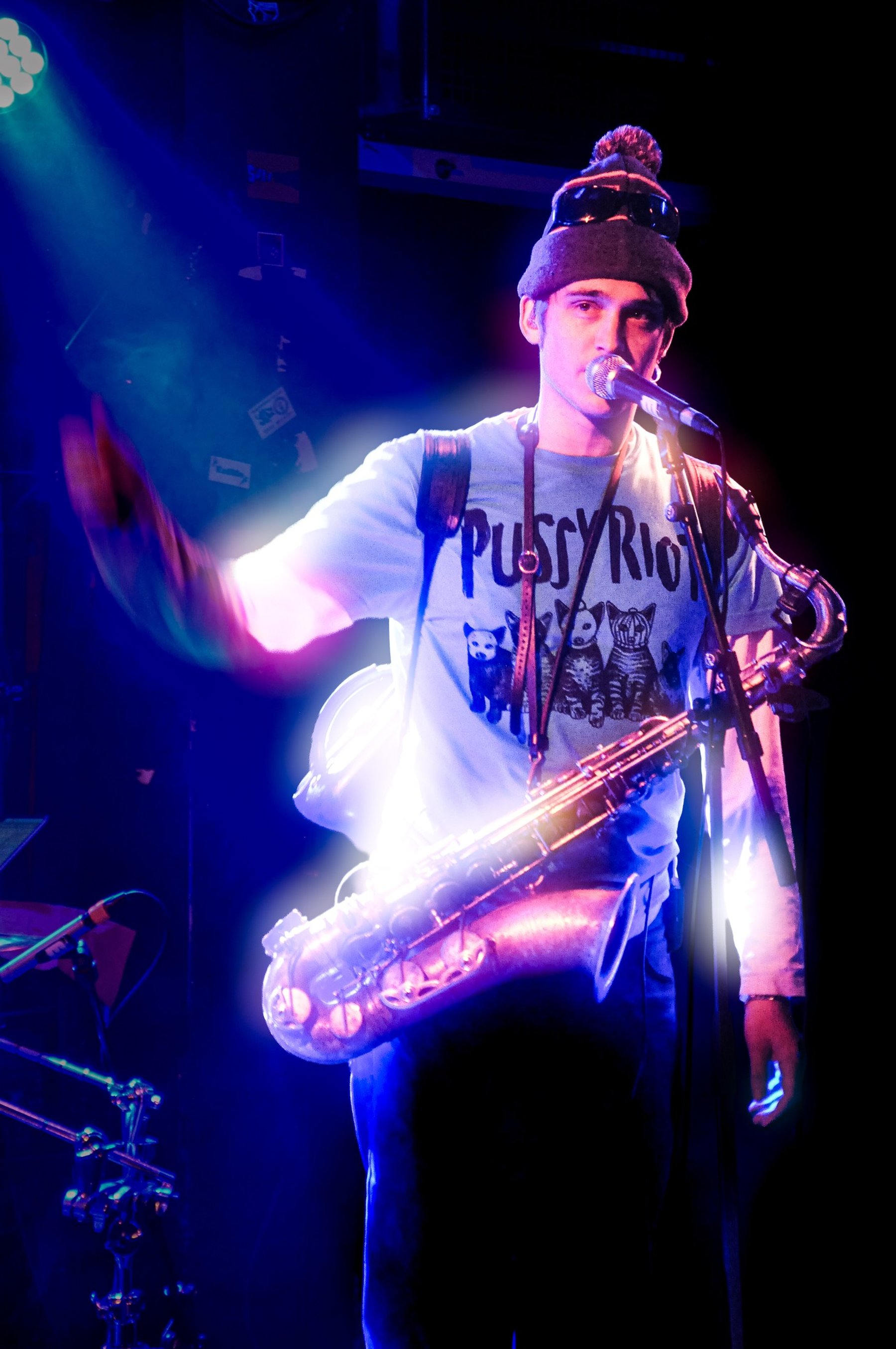
The saxophonist without a saxophone
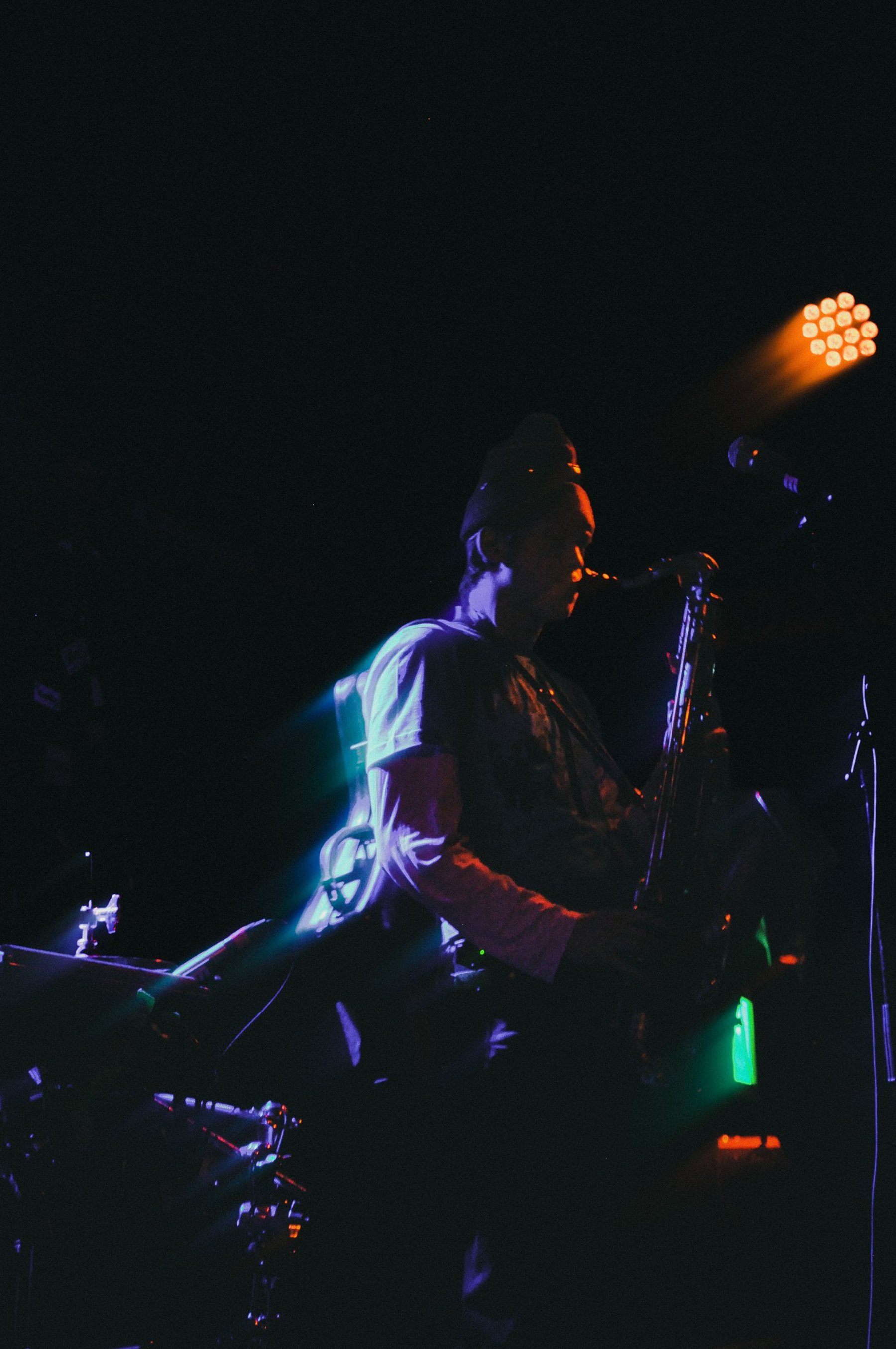
The first thing they asked for on stage was for the lights to be dimmed, so they could hide their shame. They explained that the show would be different from usual and apologised. Then the saxophone and drum tunes started piercing through low blue light and smoke.
Thorbjørn was on stage as well. He joined the instruments with guttural throat singing, screamed poems, told jokes between the sets and made interpretive dance moves, rolling on the floor. They were not prepared for this, but they still talked to the audience, encouraged people to try a mosh pit at the end and apologised again and again, trying to fill the gap left by the missing saxophone.
This time they were working it out on the spot. Usually they do not experiment on purpose. ‘To be honest, I guess there's naturally a limitation by being two saxophone players and one drummer. But actually, we never intend to experiment. We intend to write popular music. We're just bad at it, I guess,’ Oliver jokes.
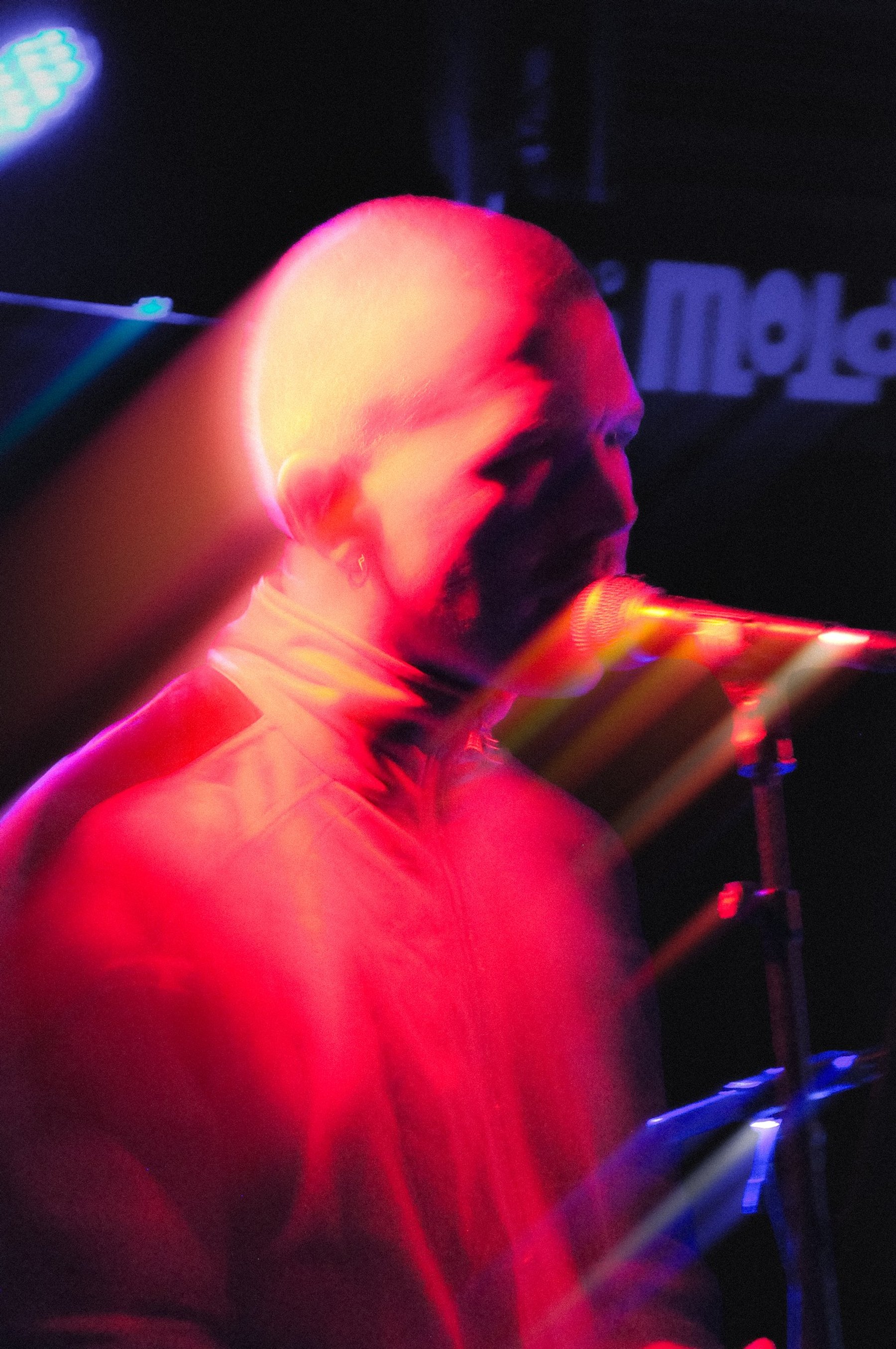
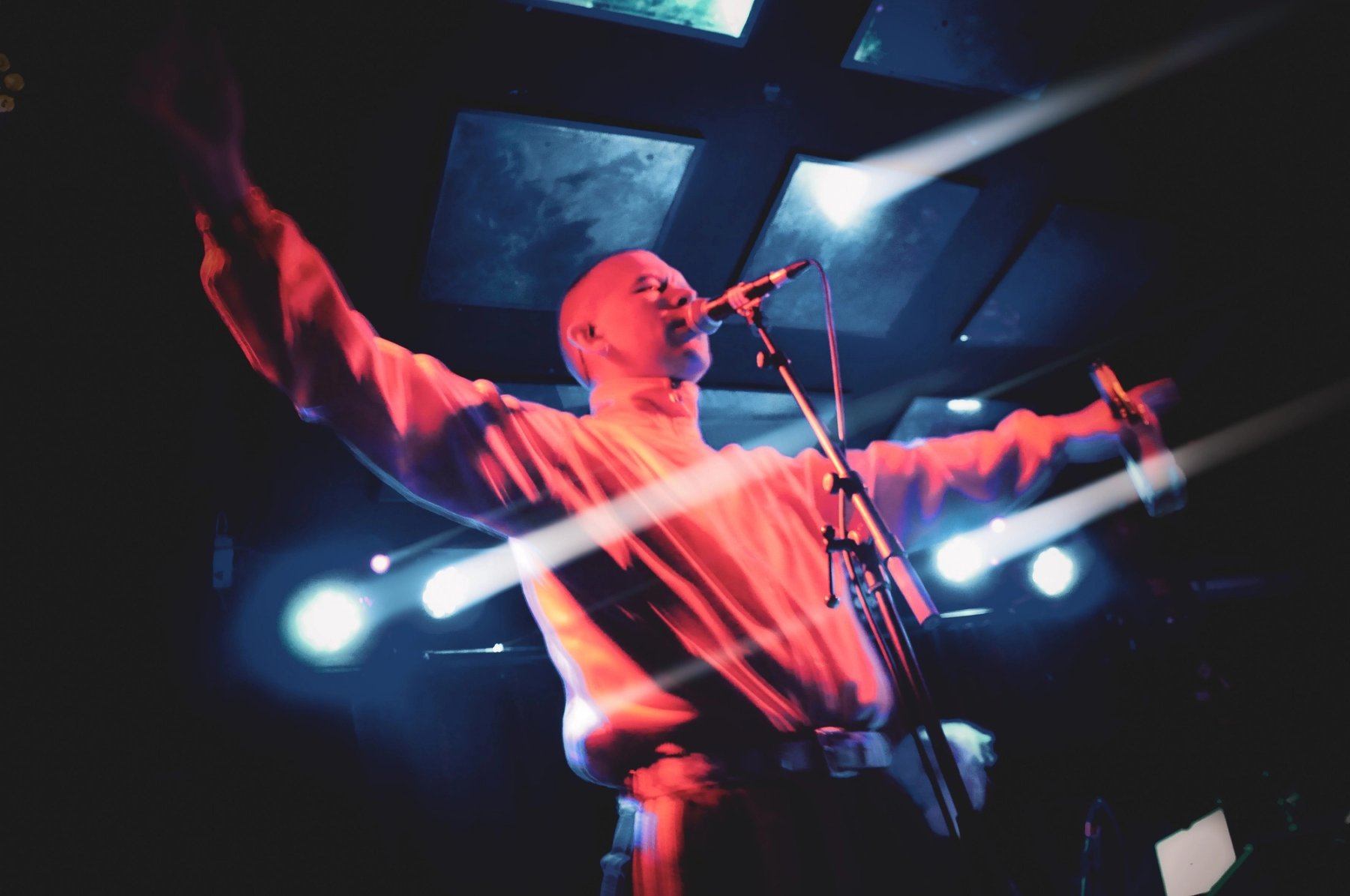
Politics on stage, and the backlash that follows
Their political messages and speeches are deliberate every time. Asked whether they get backlash for their stance on stage, Oliver answered: ‘Of course, nothing but.’
Smag På Dig Selv speak out on political issues, on stage and off it. They say they have been censored over the years: they were not allowed to wear shirts in solidarity with Palestine on television, bring Greta Thunberg on stage or make political statements during TV appearances.
‘We speak up a lot, it's a part of what we do. There is this genocide happening, and most Western politicians don't acknowledge it and try to silence it, so there are limitations all the time,’ Oliver says.
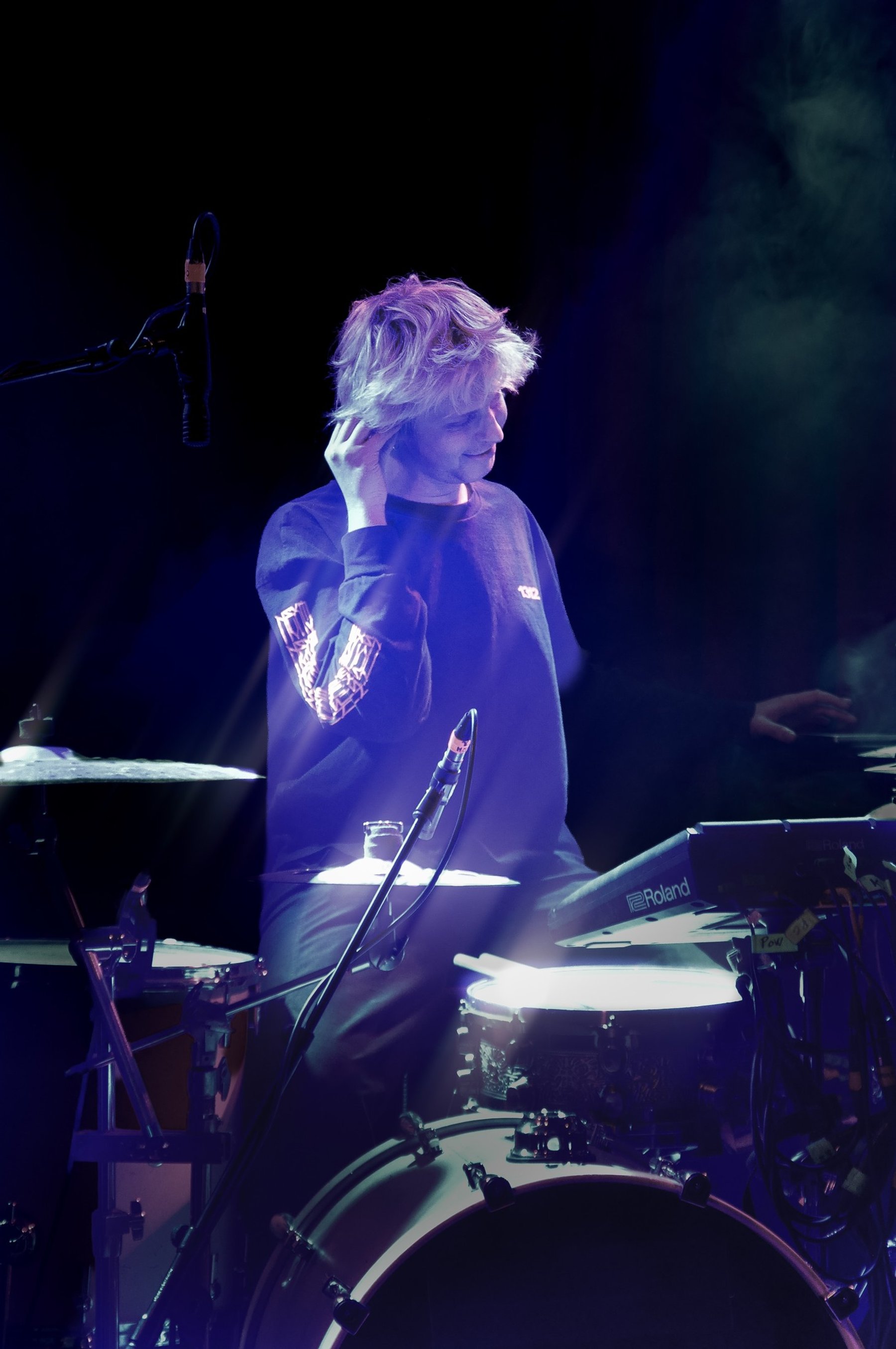
Controlled chaos
A few weeks before this concert, in a similar bar in Bucharest, Andreea met a Danish man on a random Thursday night. She asked him if he knew the band. ‘Know them? They're my friends,’ Danni answered. He was their sound technician for five years.
He wanted us to ask the band one important question: who has the most teeth? The answer came at once: Oliver. Apparently he is the only member with all his original teeth.
Their chaos goes beyond forgotten instruments. On their first concert trip, in Portugal, they met a local who was brewing his own liquor. After drinking with him, Thorbjørn went outside a bar to relieve himself. ‘Because it was in the middle of the night, and I was so drunk, I went up somewhere where there was just the top of a tree. I fell down five metres, but on grass. Oliver thought I died,’ the saxophonist adds.
He was taken to a hospital. By his own account, he then played five shows in a wheelchair, in different countries.
Stories that sound too wild to be true, two saxophones and a drum: that is Smag På Dig Selv. They take their music and their politics seriously, and their songs come out of disagreement. On this night, it all came together as beautiful chaos.
Lastly, we asked them to explain the band to a five-year-old. ‘Dance music,’ says Thorbjørn. ‘Happy music. Jump music,’ adds Oliver.
More from Voices

Voices
Wild Wild Women: "If the hunger dies, you die"
India's first all-female hip-hop collective spent this summer on their most extensive European run yet, ending at Sziget. MC Mahila, one of the five, on how it started at a cypher in Mumbai, what it cost to get there, and why nobody in the group writes anybody else's verse.

Voices
From Tunis to Sziget: "our sound belongs on those big international stages"
Illbucks won a place on a European festival stage, brought his band from Tunis to Budapest, and played Sziget with them behind him. The Tunisian rapper, singer and producer on the set, the crowd and what he was watching when he was not on stage.
Voices
"Don't only chase the biggest names"
Half a million people, nine stages and a main stage inside a football stadium. What Untold is actually like, from someone who spent all four days moving between them.
TREACLE