
Voices
11.09.26 · Budapest
Wild Wild Women: "If the hunger dies, you die"
// Annelies · 9 min read
Two of them were eating dosa. They had been going to the cyphers in their area, the open circles where rappers take turns over a beat, and somewhere in that conversation came the idea that there should be one with only women in it. So Krantinaari and HashtagPreeti started calling everybody they knew. Six or seven turned up. They named it Wild Cypher.
That is the entire origin story of Wild Wild Women. Five rappers, described everywhere since as India's first all-female hip-hop collective, who spent this summer on their most extensive European run yet and finished it in a field in Budapest.
"We came together under one roof," says MC Mahila, one of the five. "That togetherness just came automatically. We didn't have to force it."
We spoke to her a few weeks after Sziget, at home in Mumbai, with the rest of the group scattered across jobs and cities.
The park in Andheri East
The collective formed in the Marol Art Village in late 2020, but the room it came out of was outdoors.
In Andheri East there is a joggers' park where the neighbourhood's hip-hop community turns up and jams for two or three hours at a stretch. Live beatboxing, freestyles, songwriters, small kids, anyone who wants to spit something. If somebody from the area has a release, they will put on a small concert on the spot and everybody sings along. That park is where Wild Wild Women started.
Mahila says she did not arrive there as a rapper. "I was much of a poet, actually. I used to not write songs or rap or anything. I used to just write poetries and poetries. And once, just rhythmically, I tried to spit the poem in such a way. And it just came out as a rap."
She is 24. Shruti Raut on her passport, MC Mahila on a line-up. She counts the collective as five years old since last December.
What the group are up against
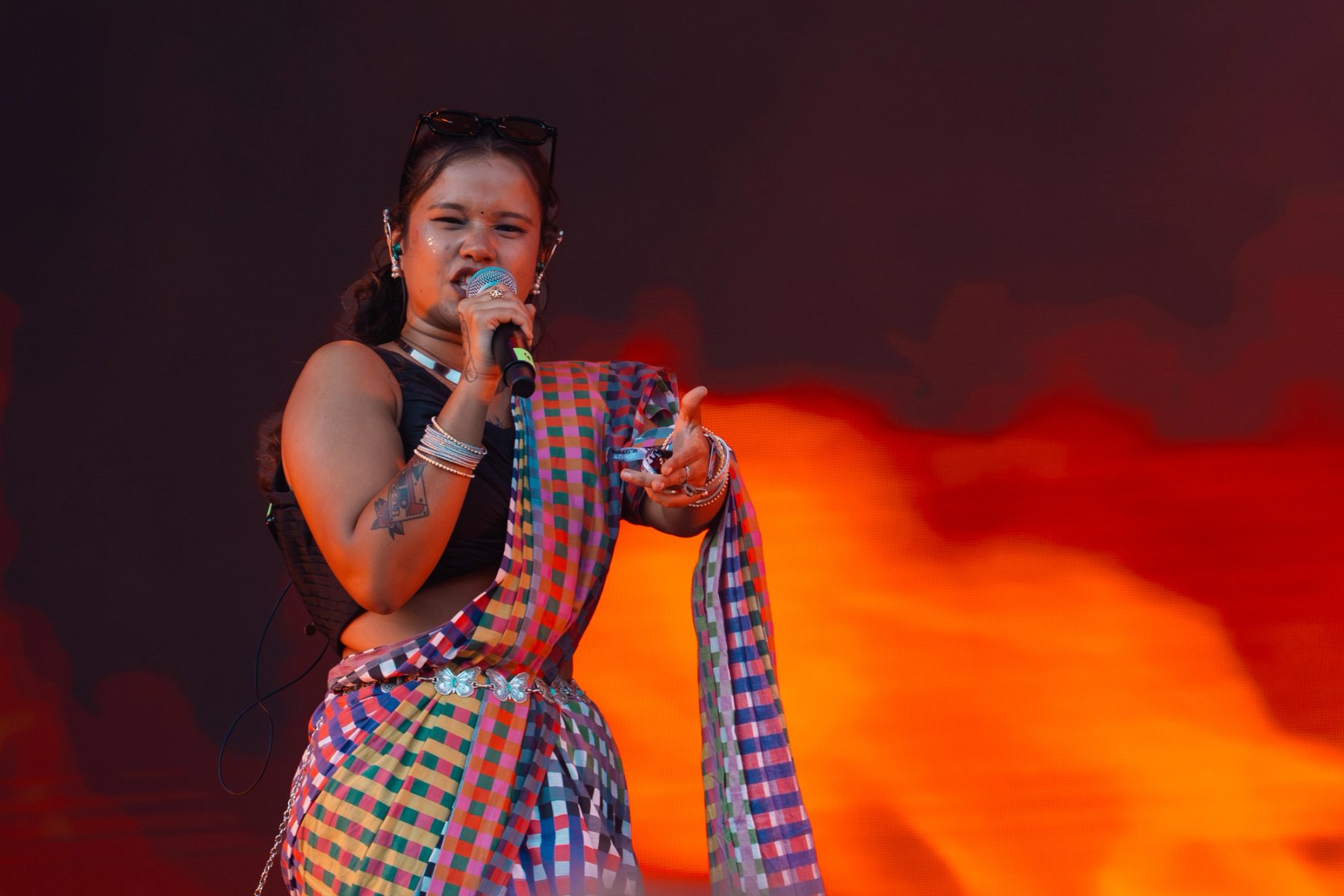
"Society is a bit patriarchal, and I need to say a lot patriarchal, because women are always put down in some way or the other. You have to always overdo other things just because you want to do something in your life. It takes a lot of courage to be a woman here, in the land that I'm in right now. It's very difficult to get out of this mindset, to get your family out of this mindset."
She means it literally, and the example is her own front door. Like a lot of young women in the city, she grew up with a curfew: home by seven, eight at the latest, and after nine no further than the shop on the corner. The shows she wanted to play started at eight.
"I go to shows, gigs which happen after eight, and I have to come back at like ten, eleven, or maybe twelve. In the initial stage I had to gain the trust of my family and show them what I'm doing. And that led me to a process. It was a process. With time, they got out of it."
"And now me travelling solo in Europe, in another country, and they still believe that I'll be safe, strong, that I can take care of myself."
How she got there took years, and none of it was confrontation. "Just by being straight up. By speaking up. By having a conversation about it." Financial independence, emotional independence, and turning up to the thing again and again until it stopped looking like a phase. "After five years I'm speaking like this. Before this I was not so confident. Now I can speak about my past and the things I faced. I outgrew that."
The other four have their own versions of the same negotiation, and she thinks the ground is shifting. "After Covid it has started a lot. I could see a lot of women taking up spaces, speaking about themselves."
Five writers, no editor
The collective works with producers, but nobody writes anybody else's verse. "I write for myself. Preeti writes for her. JQueen writes for her. Pratika writes for her. Kranti writes for her." They sit together and help each other with a word or a line, and that is where it stops. "If one of the girls has written something I do not connect to, but she feels it, then. Creative expression should be free for anybody, for any artist. That is a very important point."
Which is an unusual way to hold five people together for five years. Nobody holds editorial control over anybody. That may be exactly why it has lasted.
They rap in more than one language, often inside the same track, moving between Hindi, Marathi and English. The subjects run from mental health to harassment to what a woman is allowed to want out loud. Production comes from outside the group and from inside it: Pratika produces as well, under the name PEP.
Mahila's own debut was "MUDDA", in a mix of Hindi and Marathi. The word means topic, or subject. The hook, in Marathi, says: stand up for yourself, fight for yourself, and know that you are going to win it.
Handing it down
The Wild Wild Women now run their own cyphers in Mumbai. The first was Rebel Girl Cypher, the second Rebel Women Cypher. They put on a show at BAJAAO, a music store in Mumbai with its own performance space, with an all-female line-up. From the DJ to the beatboxer to the sound engineer, and about sixty percent of the room was women. The rest were men from the community, which she is entirely happy about. "We would love to educate our brothers."
For the five-year anniversary they threw Wild Jam and pulled in the rest of the crew: the breakers, the skateboarder, the graffiti artist, with judging and prizes. "The show was just massive. It went crazy. We faced some loss financially, but the overall event, the environment, it was mind-blowing. We did not expect that we could throw it so big."
Sziget
Sziget was their favourite festival of the whole run, and they were only there for one day and one night. They flew in for the show and out again the next morning.
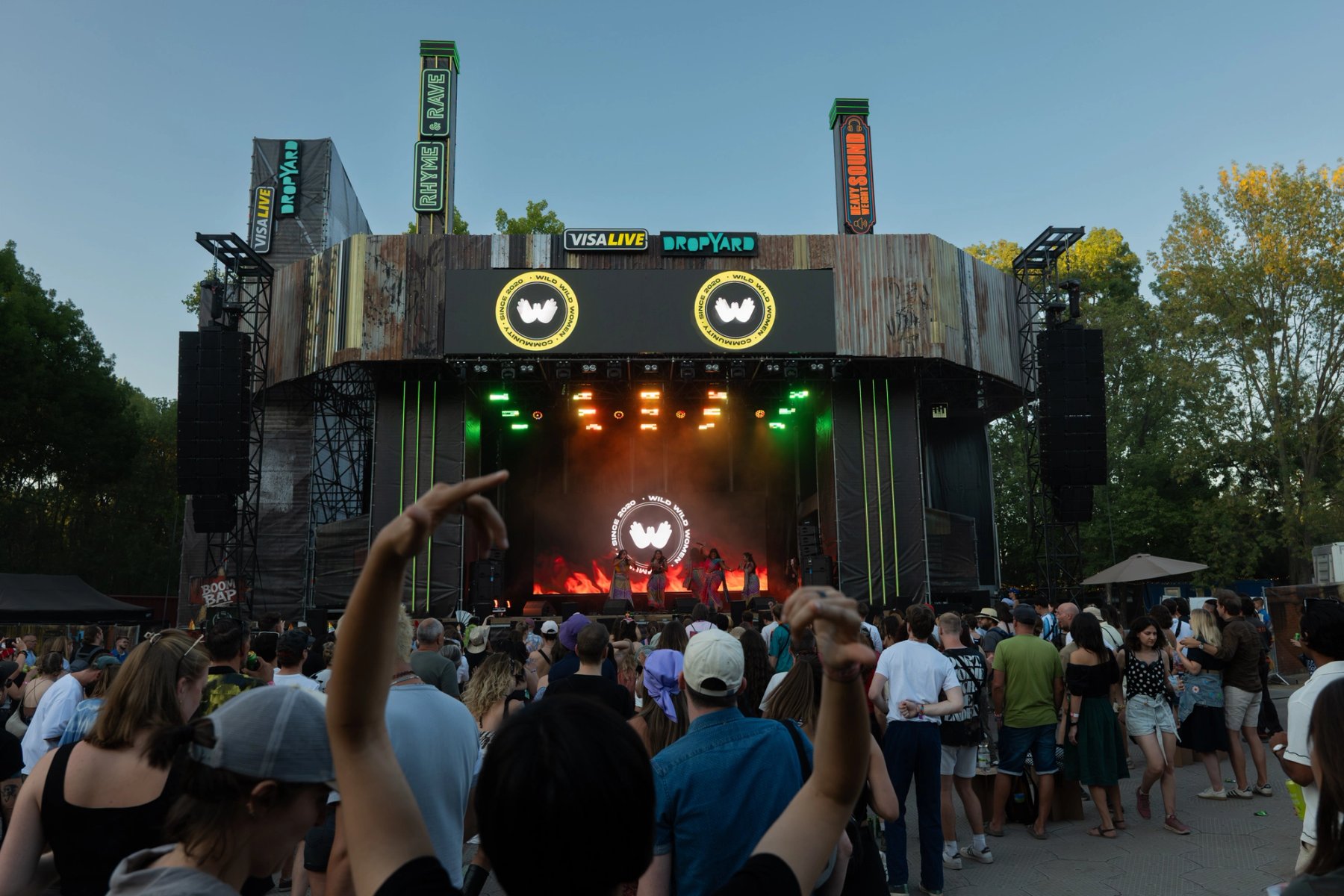
"It was so massive, so big, so many artists. You stand anywhere and you're going to enjoy the act." Twenty One Pilots were the set she caught and shouted along to. Belgium was sweet and the UK was welcoming, but Budapest landed differently, because it was the last day of the whole trip and she knew it. "I was just roaming with strangers, making friends, contacting, networking. Having fun in all of this."
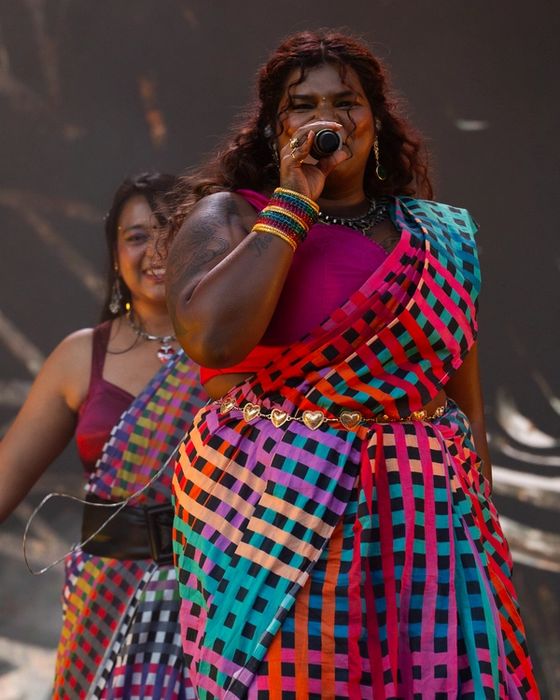
They perform in saris, and there is no rule about it. "There's no compulsion on wearing it. But we love to wear it." If somebody wants to stay at the festival afterwards, they stay in it. If they are heading back, they take it off. The compliments have been constant.
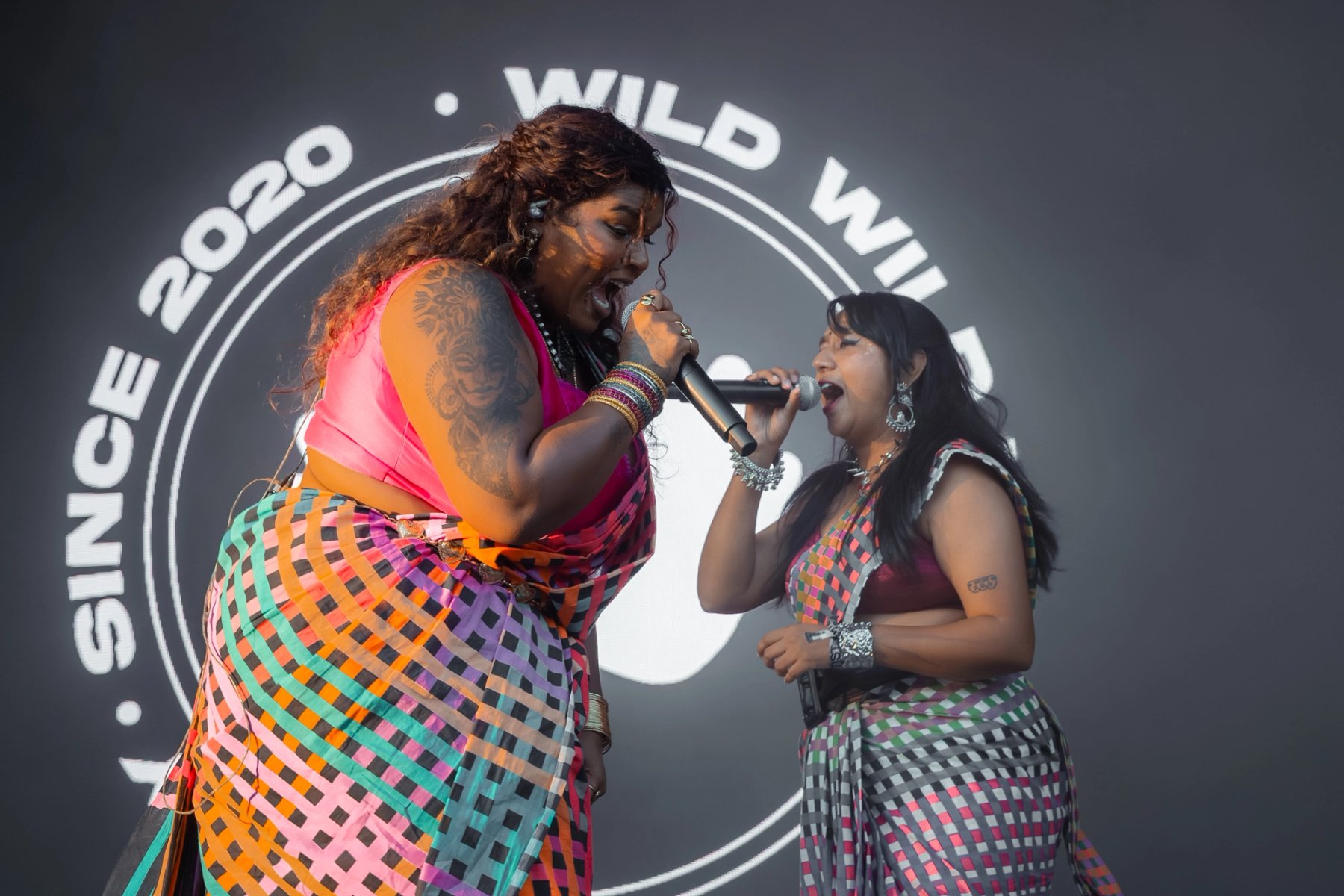
The set itself is built around the slot they are given. Forty-five minutes is the group set. An hour means solo tracks go in too, because there are five of them and everyone needs their minutes.
Hardly anyone in that field spoke Marathi. The crowd kept growing while they played, and people were dancing with their arms up all the way to the back.
Her favourite moment in the set is a song nobody can stream yet. "Bombshell" only exists live: JQueen sings, they all sit down, come back up, and hit the same step at once. "And that's like a boom. And me, while doing it, I also enjoy it. That's the best part." It is due out once the video is finished.
Being filmed
Scarlet Richter, a German director who shoots her own films, has been following the collective for years. Not only the shows: the small starts, the achievements, the houses, the families, the food.
The television version went out on Arte on 23 August, eleven days after they played Sziget. It runs about forty-five minutes, it is called "Mein Sari, mein Sound" in German and "Inde, le rap au féminin" in French, and it is built around Mahila.
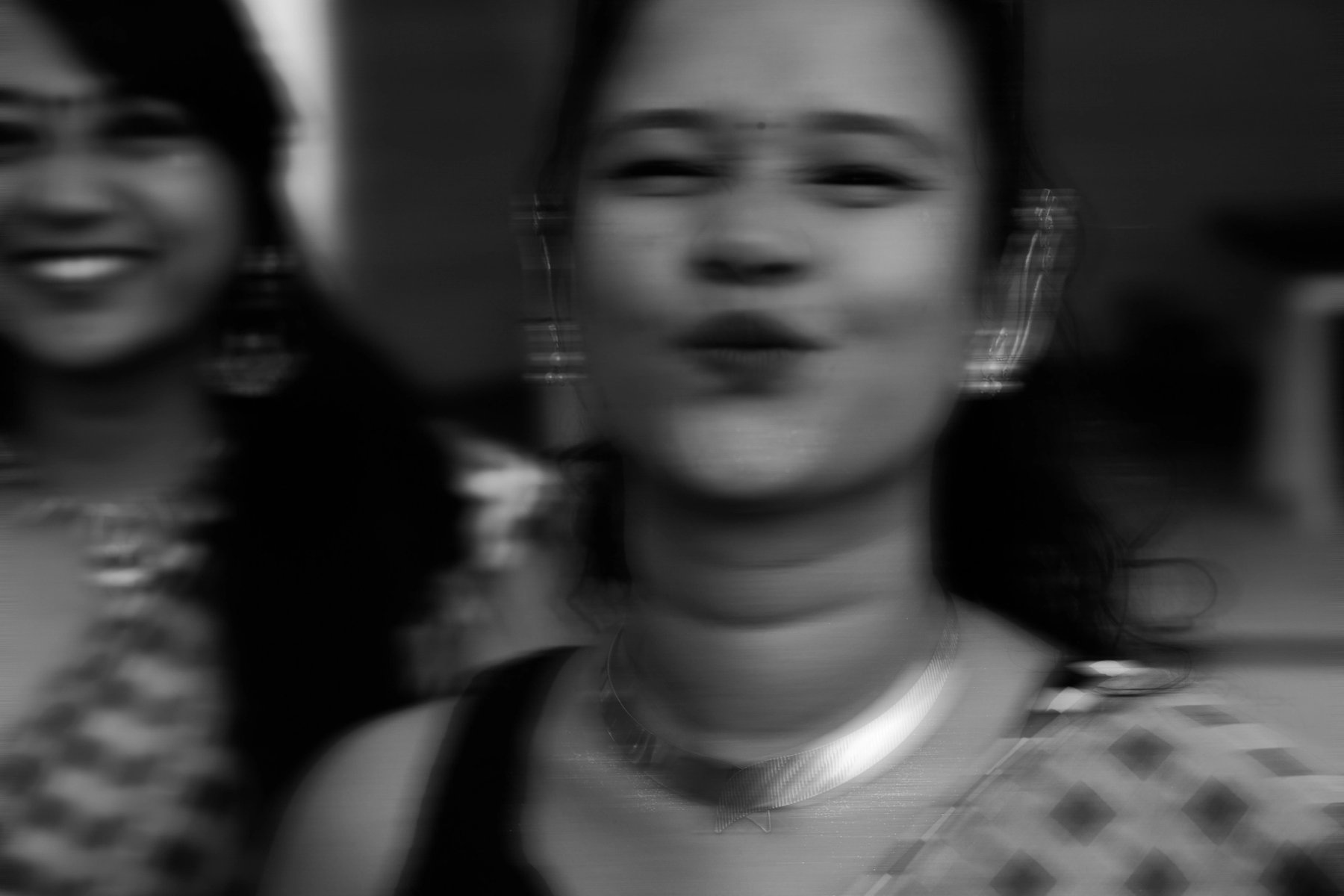
"She has seen us growing," Mahila says. "It was a great feeling for me to be part of that. Someone somewhere in the world realises it and just wants to show the world about it."
"I come from a very small ghetto in Mumbai. I have lived in the slums since birth and I faced a lot of financial obstacles growing up. And more or less I have earned for myself so much now, with respect, with money, with everything I have done for my family and for myself, that I can stand tall."
And: "That trust has come out of music."
What's next
Europe did not change how they work. The five of them live at least an hour apart across the city, and Mahila is closest to the middle, so everyone comes to hers. That is still where they jam.
Shows in Mumbai in October and November, then back to Europe early in the new year. Singles are coming, and an album, most of it before the end of this year.
Her advice to anyone who has not got anywhere yet:
"Just keep doing your thing. Have the same hunger you had on day one. If the hunger dies, you die. Be hungry for your art 24/7. It does not mean you have to make songs every day. But whenever you write a song, put your heart out in it, put your soul out in it. Let it touch people's soul. That's how we make music."
Interview and photographs: Annelies Vollmuller, Sziget Festival, August 2026.
Also on TREACLE
Voices
From Tunis to Sziget: "our sound belongs on those big international stages"
Illbucks won a place on a European festival stage, brought his band from Tunis to Budapest, and played Sziget with them behind him. The Tunisian rapper, singer and producer on the set, the crowd and what he was watching when he was not on stage.
Field Notes
Sziget 2026, Day -1 and Day 0: the year the festival got itself back
For the first time since 2017, Sziget belongs to the people who built it. You can hear it in what they programmed before the festival even opened.

Voices
"Don't only chase the biggest names"
Half a million people, nine stages and a main stage inside a football stadium. What Untold is actually like, from someone who spent all four days moving between them.
TREACLE