
Field Notes
07.08.26 · Berlin
Where to see live music in Berlin: a guide to the rooms
// Coda · 11 min read
Berlin has more places to see a band than any city in Europe, and almost none of them were built for it. The rooms here are old cinemas, boiler houses, sports halls, cavalry stables, a workers' canteen, a bathhouse. That is most of the pleasure. Below are the ones worth knowing, from smallest to largest, with what tends to play in them.
We have shot in most of these, which is the only reason we can tell you what the room actually feels like from the floor. Everything here was checked in August 2026, and in this city that matters: venues close fast.
The small rooms
Privatclub, Kreuzberg. In the basement of an old post office on the Skalitzer Straße, marked only by a glowing P above a brick doorway. Low ceiling, retro fittings, and one of the smallest proper concert rooms in the city. This is where bands play their first Berlin show, where the more leftfield bookings land, and where you stand two metres from the stage. We shot Armand Hammer here and worked out halfway through the set that billy woods had no intention of showing us his face. He keeps it out of frame on principle, and in a room this small there is nowhere for a photographer to hide from that.
Kantine am Berghain, Friedrichshain. Around 200 people in the former canteen of a district heating plant, 1960s interior left exactly as it was. Avant-garde, noise rock, ambient, black metal, small touring acts. Worth saying plainly: going to the Kantine is not going to Berghain. Separate entrance, normal ticket, no door ritual. It is also the room where we have discovered the most: we walked in for Genesis Owusu and Sid Sriram knowing almost nothing about either, and walked out fans of both.
Badehaus, Friedrichshain. 250 for concerts in the actual former bathhouse of the railway repair works. Over 350 nights a year of small touring bands, release parties and showcases.
Cassiopeia, Friedrichshain. Up to 270 for gigs, exposed brick, punk and hardcore and ska and metal, wrapped in a compound with a skate hall and a climbing tower. One warning, and it is a real one: as of summer 2026 the owner of the RAW site has told Cassiopeia to leave, the city has objected, and nothing is resolved. Check before you travel.
Wild at Heart and Schokoladen, Kreuzberg and Mitte. The two survivors. Wild at Heart is the rockabilly, punk and surf dive that has outlasted everything around it. Schokoladen is the last of the Mitte squat-era venues, and structurally safe: a foundation bought the building in 2012 after an eighteen-year eviction fight. We have not made it into either of them yet. If you have, tell us what we are missing.
The middle, where most of the good nights happen
Lido, Kreuzberg. 550 to 600 in a 1950s cinema with a wooden floor and the original chandeliers still hanging, which is why confetti and pyro are banned. Indie, rock, punk, garage. This is also where Coda started: the first concert we ever photographed was Sam Tompkins here in March 2022. If a band you love is playing Lido, go. It is the size at which this city is at its best.
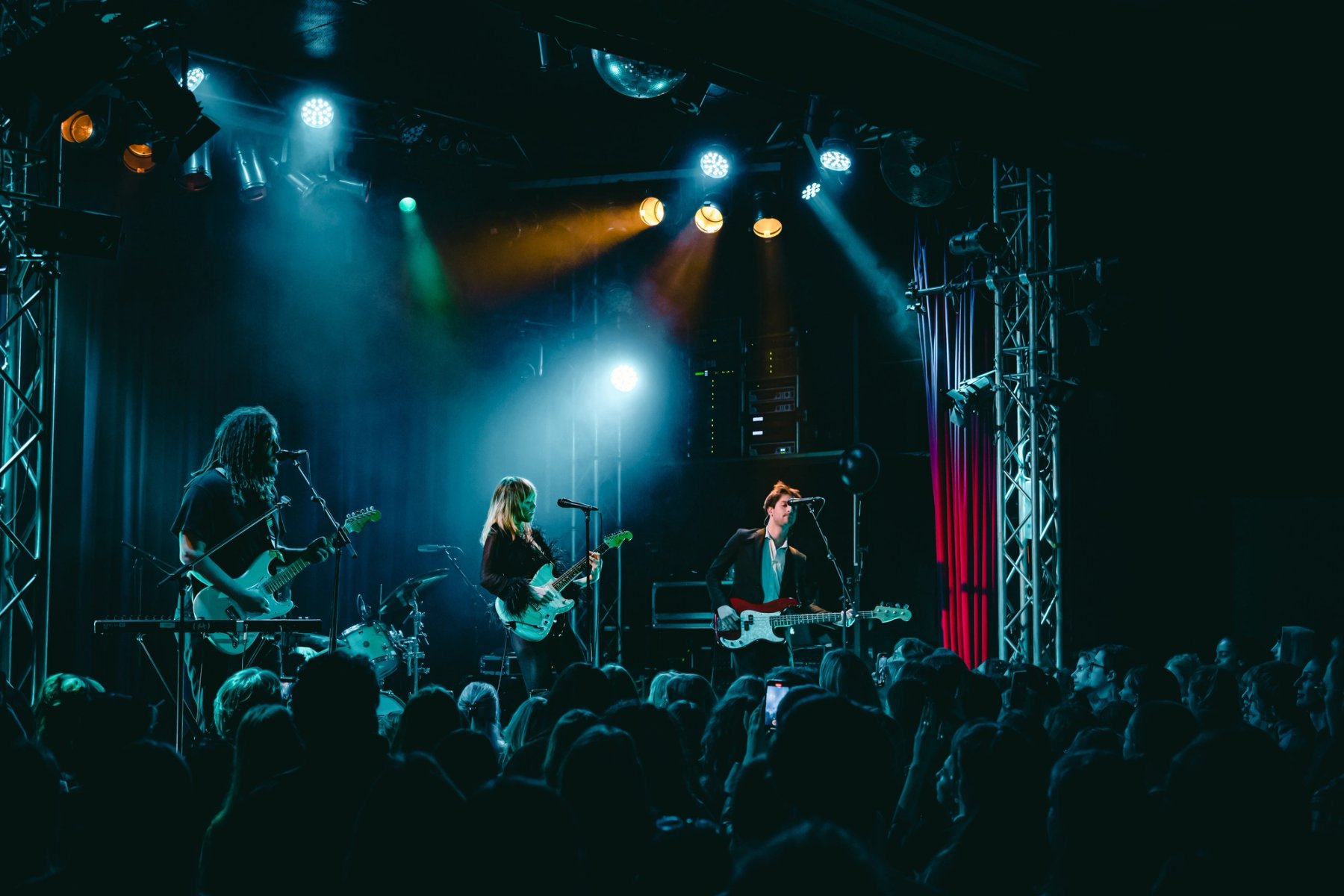
Gretchen, Kreuzberg. 650 people under the vaulted brick ceiling of a Prussian cavalry stable, reached through a courtyard. Around 250 nights a year of bass music, drum and bass, hip hop, jazz and indie. It has won the German live-programming prize five times, and deserves it.
Hole 44, Neukölln. 650 in a former cinema by S+U Hermannstraße, so you get the raked, deep shape of a picture house instead of a black box. Around 170 shows a year across metal, indie, Deutschrap and K-pop. It is the direct successor to the much-missed Musik und Frieden, same people.
SO36, Kreuzberg. Around 800, and the most important room on this list. Punk, hardcore, ska, metal, run by a non-profit rather than a promoter, on the Oranienstraße since 1978. Also home of Gayhane, the world's first club night for queer people of Muslim background, running monthly since 1997. We wrote a whole guide to shooting here. One practical thing for everyone: come early. Getting to the front once the room fills is genuinely hard work.
Metropol, Schöneberg. A room for about 850 inside a listed 1906 theatre on Nollendorfplatz, with a fourteen-metre ceiling and twelve columns. Piscator staged political theatre here with Brecht on the payroll; it was the cinema where Nazis sabotaged the premiere of All Quiet on the Western Front; later it was the laser disco where Depeche Mode played their first Berlin show. Around 150 concerts a year now, and one of the few rooms in Berlin worth going to for the building alone.
Columbia Theater, Tempelhof. 800 in the 1951 cinema built for American forces at Tempelhof airport, with the raked auditorium intact. Touring acts on the way up, DJ nights, showcases.
Kesselhaus, Prenzlauer Berg. 1,000 standing in the boiler house of the old Schultheiss brewery, a listed industrial monument, with the smaller Maschinenhaus next door and a courtyard for open airs. International acts that sell around a thousand tickets.
Festsaal Kreuzberg, Alt-Treptow. 1,100 in the main hall, eight-metre ceiling with daylight. The name is a fossil: the original burned down in Kreuzberg in 2013 and it reopened in Treptow in 2017, keeping the name. Pop, punk, jazz, reggae, electronic, deliberately genre-blind, with readings and conferences in between.
Astra Kulturhaus, Friedrichshain. Roughly 1,500 in the former culture house of the East German railway, parquet, Ost-Design and a big beer garden. One honest warning: irregular structural columns mean some spots have genuinely bad sightlines. Arrive early.
Huxleys Neue Welt, Neukölln. Around 1,600, and the deepest history of any room here. The site has been an entertainment ground since 1867: beer palace, variety theatre, hippodrome, wartime hospital, boxing hall, political rally hall, roller disco, and Huxleys since 1992. Hendrix played his first Berlin shows on this spot in 1967.
Jazz, and the rooms that do not fit
The four rooms below are the ones we have not shot in ourselves. They are here because people whose taste we trust keep telling us to go.
Quasimodo and A-Trane, Charlottenburg. The two jazz institutions. Quasimodo is the storied basement under the Delphi, up to 350 seated, jazz at root but also blues, soul and funk. A-Trane is smaller, open since 1992, with a late Saturday jam session that runs until it stops.
silent green, Wedding. A former crematorium with the best experimental programming in the city. The domed hall holds 400, the concrete hall below up to 1,000. If you want to know what Berlin sounds like when it is not selling tickets to tourists, start here.
Berliner Philharmonie, Tiergarten. 2,440 seats in the hall that invented vineyard seating and that every concert hall since has copied. Worth a place even in a guide like this: Dave Brubeck and Miles Davis both recorded live albums in this room.
The big ones
Columbiahalle, Tempelhof. 3,500 standing, and the step every act takes before an arena. Built in 1951 as a sports hall for American forces, and its acoustics are its reputation: sound companies use it as a demo room and touring acts book it for pre-tour rehearsals. Note the naming trap, because everyone falls into it: locals call this one the C-Halle, and the little 800-capacity Columbia Theater next door the C-Club. The range of what plays here is the other thing worth knowing. We shot Bomba Estéreo in this room and Beartooth five months later, and it is hard to think of two nights with less in common.
Tempodrom, Kreuzberg. Up to 4,200 in a concrete building shaped like a circus tent, because it began in 1980 as an actual tent, funded by a nurse's inheritance. Amphitheatre seating in two tiers, and a salt-water spa in the same complex that hosts underwater concerts. We used to live around the corner from it, and there is a particular pleasure in walking home from a show.
Uber Eats Music Hall, Friedrichshain. 4,500, purpose-built in 2018 and the only room on this list designed for sound from scratch: absorptive cladding throughout, 0.8 seconds of reverberation at full capacity. It was called Verti Music Hall until 2024, so older listings will confuse you.
Max-Schmeling-Halle and Velodrom, Prenzlauer Berg. The two arenas, roughly 12,000 each, run by the same operator. The Max-Schmeling-Halle is built 70 percent into a hill of war rubble with a grass roof that has sheep on it in summer. The Velodrom is sunk five metres into the ground under Europe's largest self-supporting steel roof, over a working wooden cycling track.
Uber Arena, Friedrichshain. 17,000, the main indoor arena, formerly the Mercedes-Benz Arena and before that O2 World. Where the stadium-adjacent tours land. Do not confuse it with the Uber Eats Music Hall: they are two separate buildings standing next to each other on the same square, run by the same company, and they were given almost the same name on the same day in 2024. The Arena is the big one, the Music Hall is the 4,500-capacity room beside it.
Summer only, and worth planning a trip around
Waldbühne, Westend. 22,290 seats in a natural bowl in the woods, built for the 1936 Olympics on the model of the ancient theatre at Epidauros, which is why it sounds the way it does with almost no help. May to September only.
Parkbühne Wuhlheide, Oberschöneweide. 17,000 in a 1951 amphitheatre built on war-rubble embankments, deep enough into the forest that the walk in from the S-Bahn is part of the night. Listed as a garden monument.
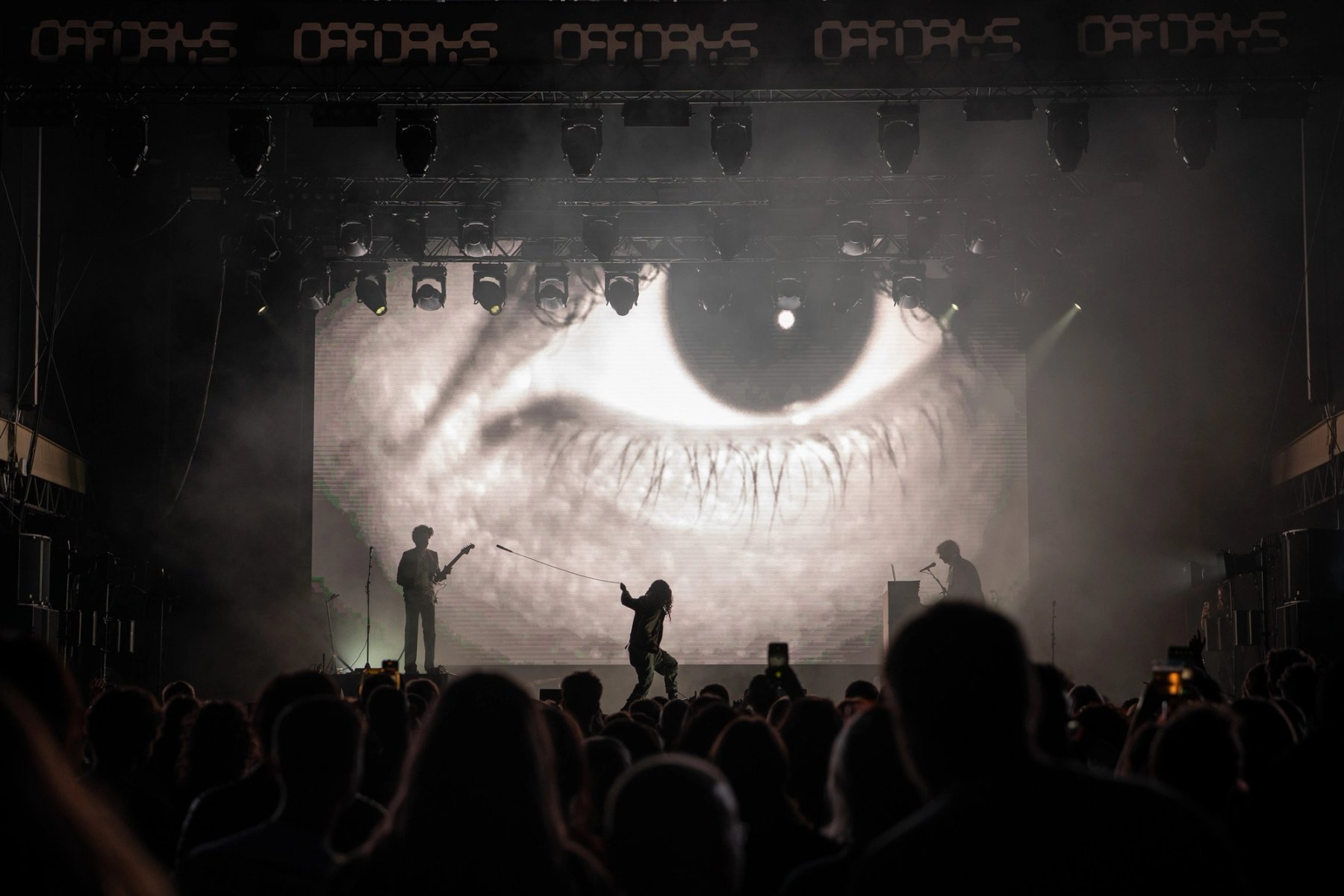
Zitadelle Spandau. The Citadel Music Festival has run every summer since 2005 inside a Renaissance fortress, and the Off Days series used the same walls: we shot both editions there, in 2024 and 2025. The atmosphere is the draw, cheerful and unhurried in a way big shows rarely are. One thing to know if you go looking: the 2026 Off Days shows were cancelled outright. The fortress programme continues.
One thing to know before you plan
Berlin loses venues. Musik und Frieden went in 2020 and became Hole 44. Watergate closed for good on the second of January 2025 after 22 years. SchwuZ, the oldest queer club in the city, shut in November 2025 after almost fifty years. As we write this, several venues on the RAW site in Friedrichshain are operating without valid leases while the owner and the city argue. Check the venue's own page before you book a flight, and if you love a room, go while it is there.
Credits
Written from our own nights in these rooms, checked against the venues' own information in August 2026. Capacities are approximate and several Berlin venues do not publish them at all.
From this story
Also on TREACLE

Heard
Chlapecka at Modus Berlin 2026: a drag opener, rhinestoned CDs and "Brain"
The "Girl on the Moon" tour stopped at Modus in Berlin: a drag persona as opening act, two backup dancers and CDs rhinestoned by hand at the merch stand.
Heard
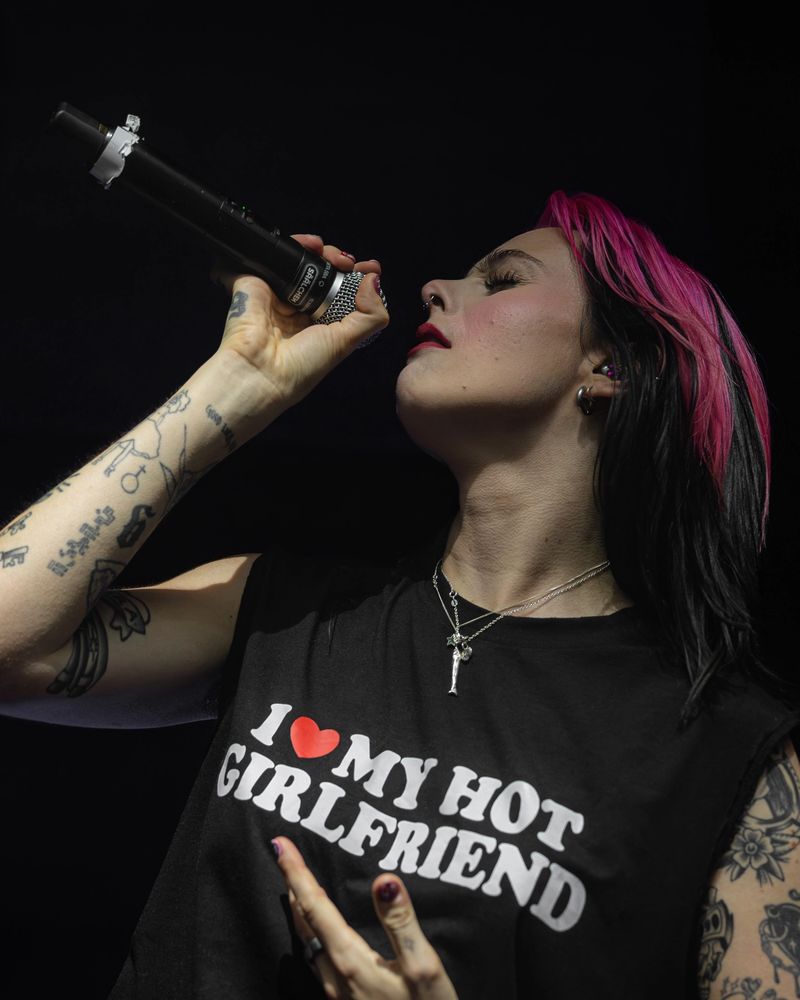
Girli at Säälchen Berlin 2026: hot takes, a pink mic and a book swap
Girli's opinionated tour stopped at Säälchen in Berlin: a book swap at the door, an inflatable pink mic for the crowd's hot takes, and signed drumsticks on a pay-what-you-can basis.
Field Notes
ADE 2026: what a day actually looks like
The 30th Amsterdam Dance Event runs 21 to 25 October, from an aquarium at nine in the morning to hundreds of club nights. Here is the shape of a day.
TREACLE